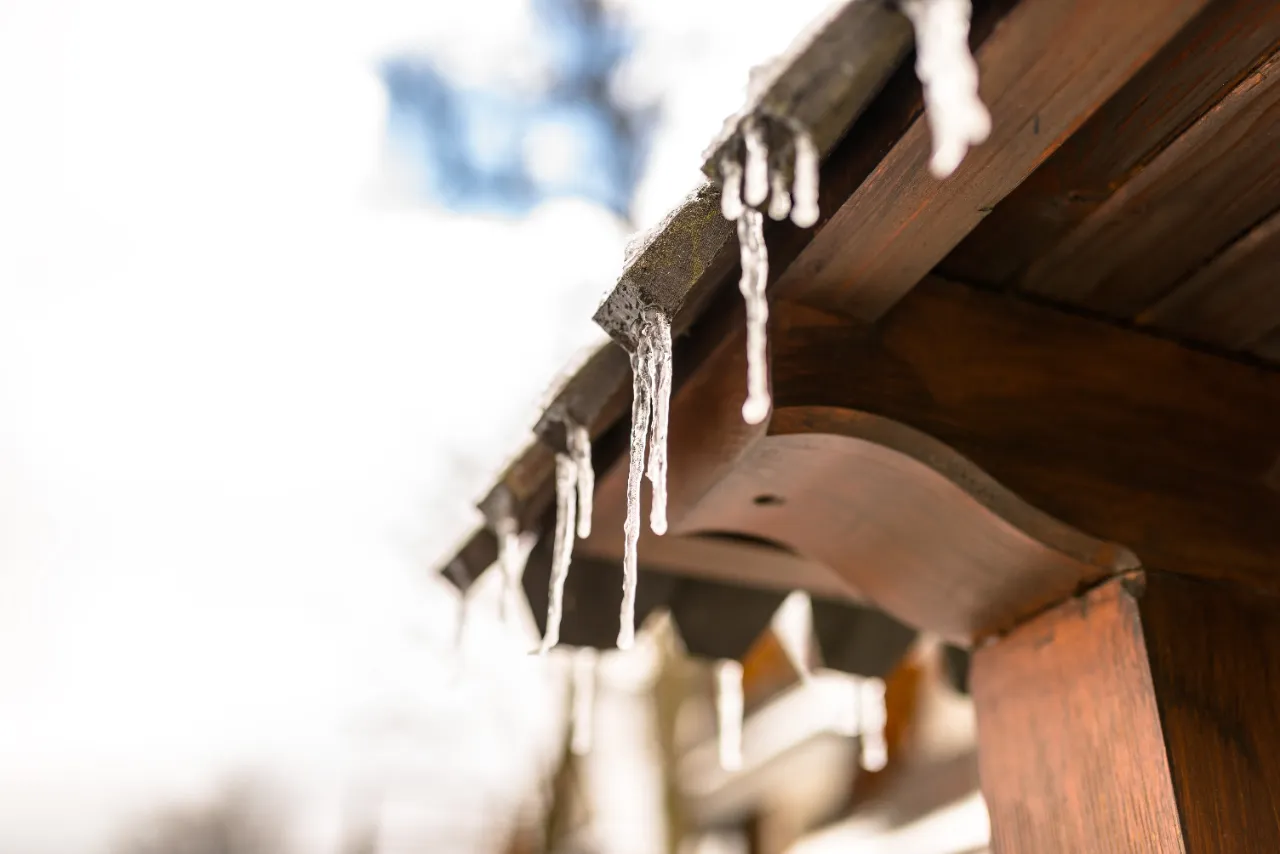
Every New York winter produces the same photo. A ridge of ice along the roof edge, icicles hanging off the gutter. And a homeowner wondering whether it's charming or expensive. It's expensive.
An ice dam forms when snow on the upper roof melts, runs down to the cold overhang, and refreezes. The ice builds into a ridge. Meltwater backs up behind it, sits there, and eventually finds its way under the shingles. Shingles are built to shed running water, not to hold standing water, so it gets in.
Here's the part most people miss. Ice dams aren't really a roof defect. They're a heat problem. Warm air escaping from the living space into the attic melts the snow from underneath. The eaves stay cold, because there's nothing warm under them.
That's why the fix usually happens inside the attic and at the gutters, not on the shingles. This guide covers what's actually going on and what to check. It also covers how to get an ice dam off without wrecking the roof.
What an Ice Dam Actually Is
Picture the roof in two zones. The upper section sits over heated living space. The overhang past the exterior wall sits over nothing but cold air.
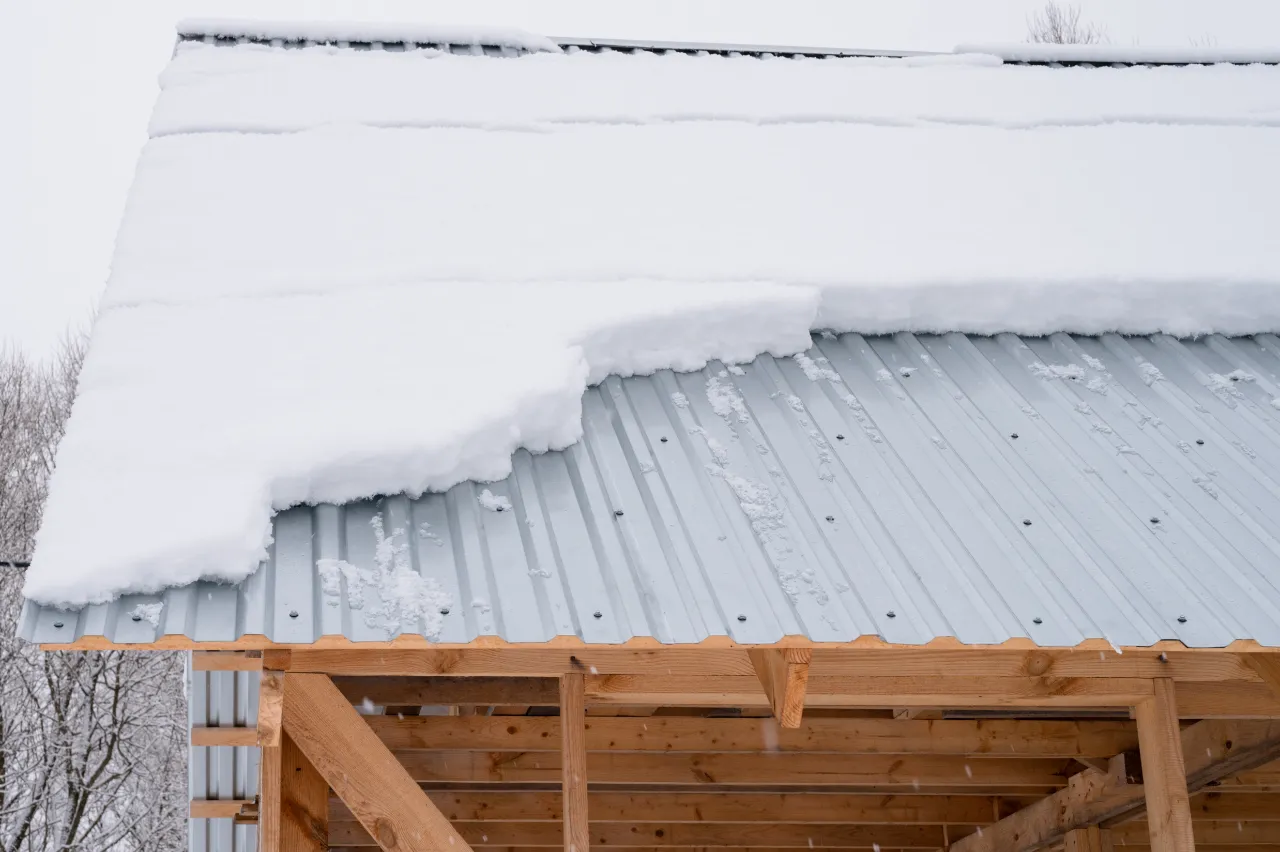
Snow on the warm upper section melts even when it's below freezing outside. That water runs down the slope, hits the cold overhang, and freezes solid. Do that for a few days and you get a ridge of ice sitting right along the eave.
Once the ridge exists, everything melting above it has nowhere to go. It pools behind the dam. Standing water works its way under the shingle edges by capillary action and soaks the decking. It shows up as a stain on the ceiling below, usually along an exterior wall.
Why Your Attic Is the Real Problem
If the attic were the same temperature as the outside air, the snow wouldn't melt and there'd be no dam. So the question isn't what's wrong with the roof. It's where the heat is getting in.
The usual suspects are gaps around recessed lights and an unsealed attic hatch. Add bathroom fans that vent into the attic. Add insulation that's thin or pushed aside near the eaves.
Ventilation matters just as much. Soffit vents pull cold air in at the bottom and ridge vents let it out at the top. That keeps the roof deck near outdoor temperature. When soffit vents get blocked by insulation, that airflow stops and the deck warms up.
What Gutters Have to Do With It
Gutters don't cause ice dams, but a bad gutter makes one worse and turns it into a second problem.
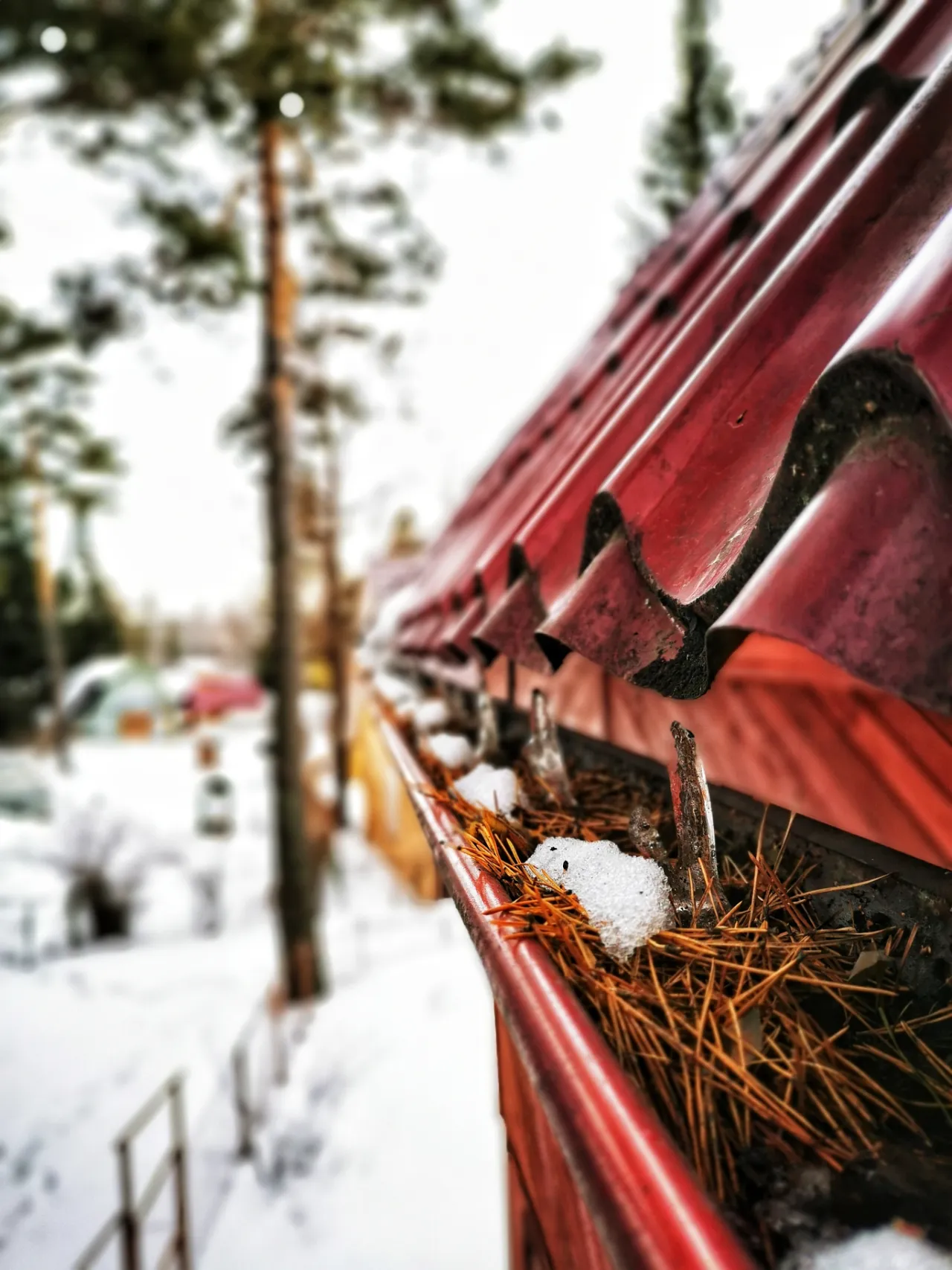
A gutter packed with leaves in November holds water going into December. That water freezes, the ice expands, and the weight starts pulling the gutter away from the fascia. By February you're not just dealing with ice. You're dealing with a torn gutter and a rotted fascia board.
Clean gutters and correct pitch won't prevent an ice dam on their own. What they do is give meltwater somewhere to go the moment temperatures come up. The alternative is water held against the roof edge, backing up under the shingles.
How to Remove an Ice Dam Without Wrecking the Roof
Whatever you do, don't chip at it. A hammer, a hatchet, or an ice pick goes straight through the shingles. That turns a winter nuisance into a spring roof repair.
Don't pressure wash it either. Be careful with rock salt, which corrodes flashing and gutters and kills whatever it lands on.
A roof rake used from the ground is the safest thing a homeowner can do. Pull the snow off the lower few feet of roof after each storm. The dam has nothing to form from. Anything beyond that belongs to someone with the right equipment. Steam removal, or work on a steep icy roof, needs fall protection.